


Città quotidianamente più connesse, necessitano di velocità di trasmissione sempre più elevate, di infrastrutture idonee a supportare larghezza di banda maggiore.
La rete realizzata da Open Fiber ha lo scopo di assicurare a cittadini, imprese e Pubblica Amministrazione una connessione ultraveloce in tecnologia FTTH – Fiber To The Home, consentendo così l’accesso ai più innovativi servizi digitali.
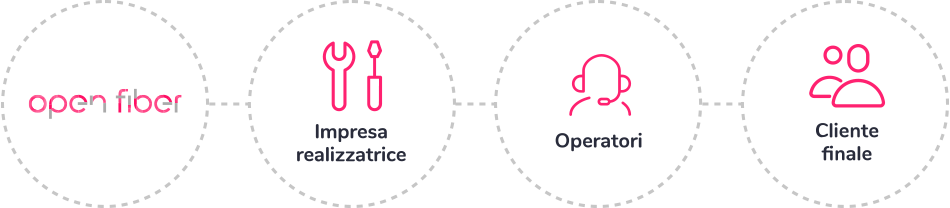
Subjects involved in the wiring process
Il processo di cablaggio della fibra ottica prende avvio con la firma di una convenzione tra il comune interessato alla realizzazione, gestione e manutenzione di un’infrastruttura di rete in fibra ottica a banda ultra larga di ultima generazione e Open Fiber.
Nell’accordo, sottoscritto con le amministrazioni locali, vengono definite modalità e tempi di lavoro (che possono differire a seconda del Comune), standard tecnici e di sicurezza per ridurre al massimo i disagi per i cittadini durante i lavori, modalità di scavo per la posa della fibra ottica. Lo scavo tradizionale sarà previsto solo dove non si possa ricorrere a nessuna delle altre soluzioni.
Dopo aver ottenuto tutti i permessi e le autorizzazioni amministrative, si procede con le attività che they will bring fiber optics to your home.
The different excavation techniques:
- la tecnica innovativa della “reduced mini-trench“, che comprende anche l’aspirazione del materiale di scarto, riducendo la polvere e il disagio per l’utenza;
- there traditional mini-trench(a low environmental impact excavation technique which, thanks to the creation of 5 cm wide trenches, allows for drastically reducing the time and costs of installation operations)
- in no-dig (therefore without resorting to traditional open-air excavations)
- there laying of the overhead network.