


From delivery to creation
The use of micro-trenching in the installation of optical fibers was introduced by Simplification Decree number 76/2020, in Article 38, paragraph 5.
The micro-trench, an evolution of the mini-trench already in use in the telecommunications world for several years, offers numerous advantages over traditional excavations.
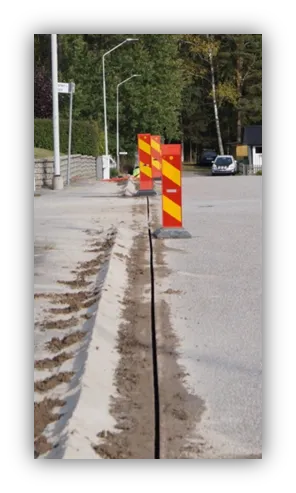
Essentially, it involves creating a small trench (normally 20 mm) inside which are placed the polyethylene mini-tubes (also called micro-ducts – diameter approximately 14 mm) which will subsequently house a fibre optic cable.
Depending on their configuration, microducts can be single or multiple. In the case of overlapping microducts, a component called a fender is often used, consisting of a certain number of overlapping microducts (usually 7) held together by a plastic sheath.
The depth of the microtrench depends on the number of microducts and the context in which the microtrench is created.
In peripheral environments, where the micro-trench is used to connect the subscriber to the nearest network access point, the micro-trench takes on the "delivery" attribute (meaning it serves to "deliver" the fiber optic access to a terminal user). In this case, a single microduct is used, and the excavation depth is 15–20 cm.
When the goal is to accommodate a plurality of optical cables over medium/long distances, for example along a road, we speak of a micro-trench “creation”.
The micro-trench creation has typical depths of 30 cm, sometimes 35, useful for maintaining sufficient extrados even in the case of positioning a fender.
The restoration of the micro-trench is done by filling the excavation with suitable mortars, usually without resurfacing.
There are generally two techniques for creating a micro trench.
The first, commonly and widely used in mini-trenching (with excavation widths of approximately 10 cm), uses a toothed wheel hydraulically operated by a single-blade excavator. Using this equipment for micro-trenching (much narrower than mini-trenching) poses problems with the quality of the excavation, which is rarely precise in width, precisely because of the system used (percussion). This results, among other things, in a significant increase in the amount of repair material required, thus increasing costs. Furthermore, this construction technology produces a considerable amount of dust, as the toothed wheel operates dry.
The second, adopted by the solutions proposed by Rertech, is based on the use of a circular tool—called a "grinding wheel"—characterized by a series of segments made from a conglomerate of diamond and other hard materials, brazed around the circumference of the tool. The width of the segments is equal to the width of the micro-trench to be created.
The diamond tool is mounted on specific machines, derived – in principle – from classic asphalt cutters, and equipped with a petrol, diesel or internal combustion engine.
The quality of the cut obtained with diamond grinding wheels, which essentially mill the road surface, is such that the micro-trench at the end of the process appears as a precise and qualitatively impeccable cut.
Diamond grinding wheels operate in a humid environment, cooled by a flow of water distributed by the machine during operation. This results in the absence of dust and, in the most efficient models, even the absence of mud, which is replaced by wet waste material disposed of at the sides of the trench.
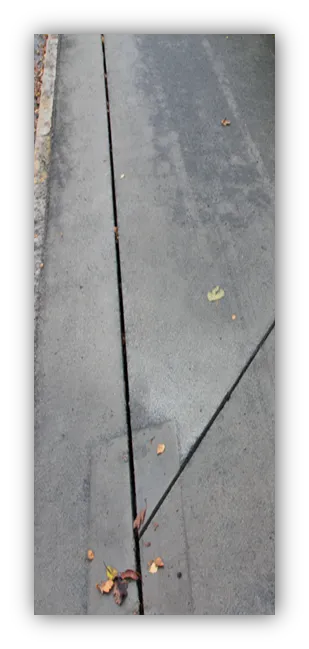
Rertech solutions
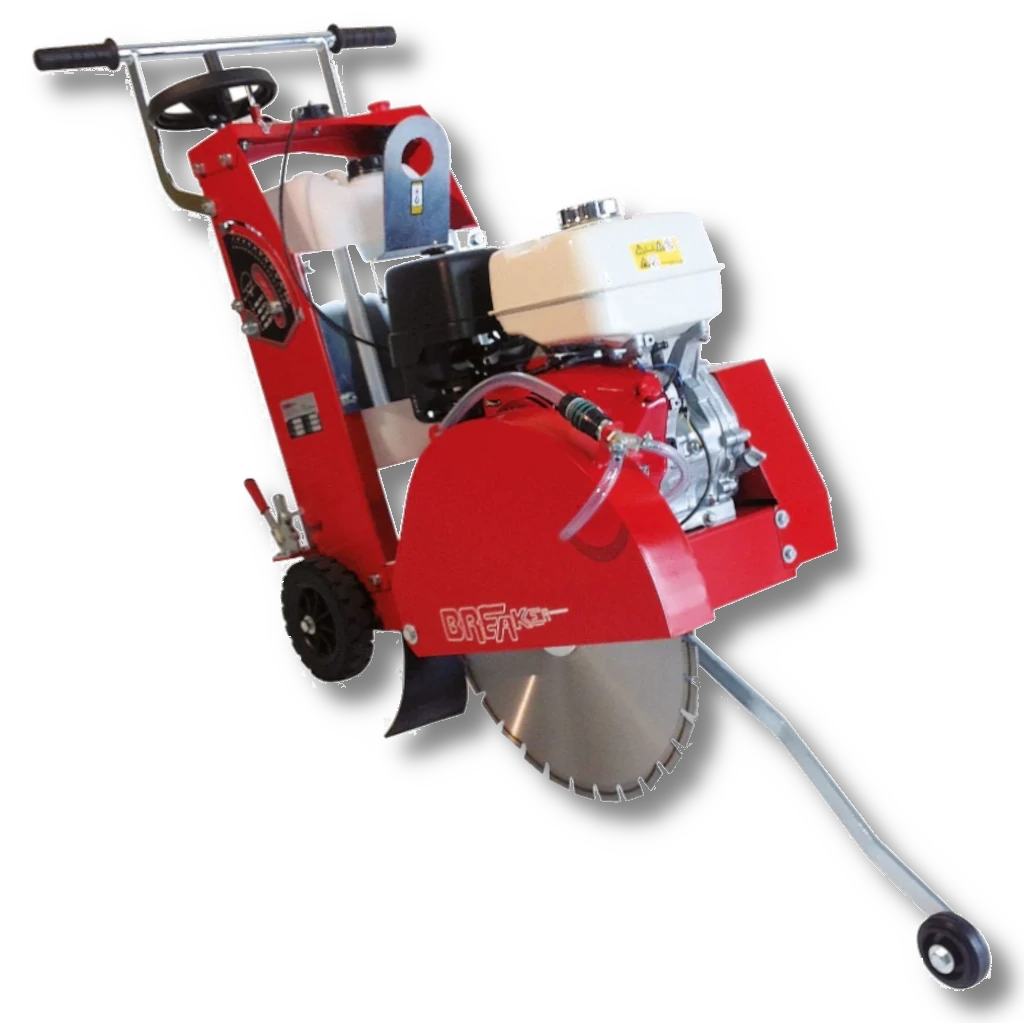
Model MT-50
ENTRY LEVEL FOR MICROTRENCH DELIVERY
Fits a grinding wheel up to 500 mm in diameter
Creates a micro trench up to 18.5 cm, with a width of 16 or 20 mm (depending on the width of the grinding wheel sectors)
14 HP, petrol, 140 kg, push action
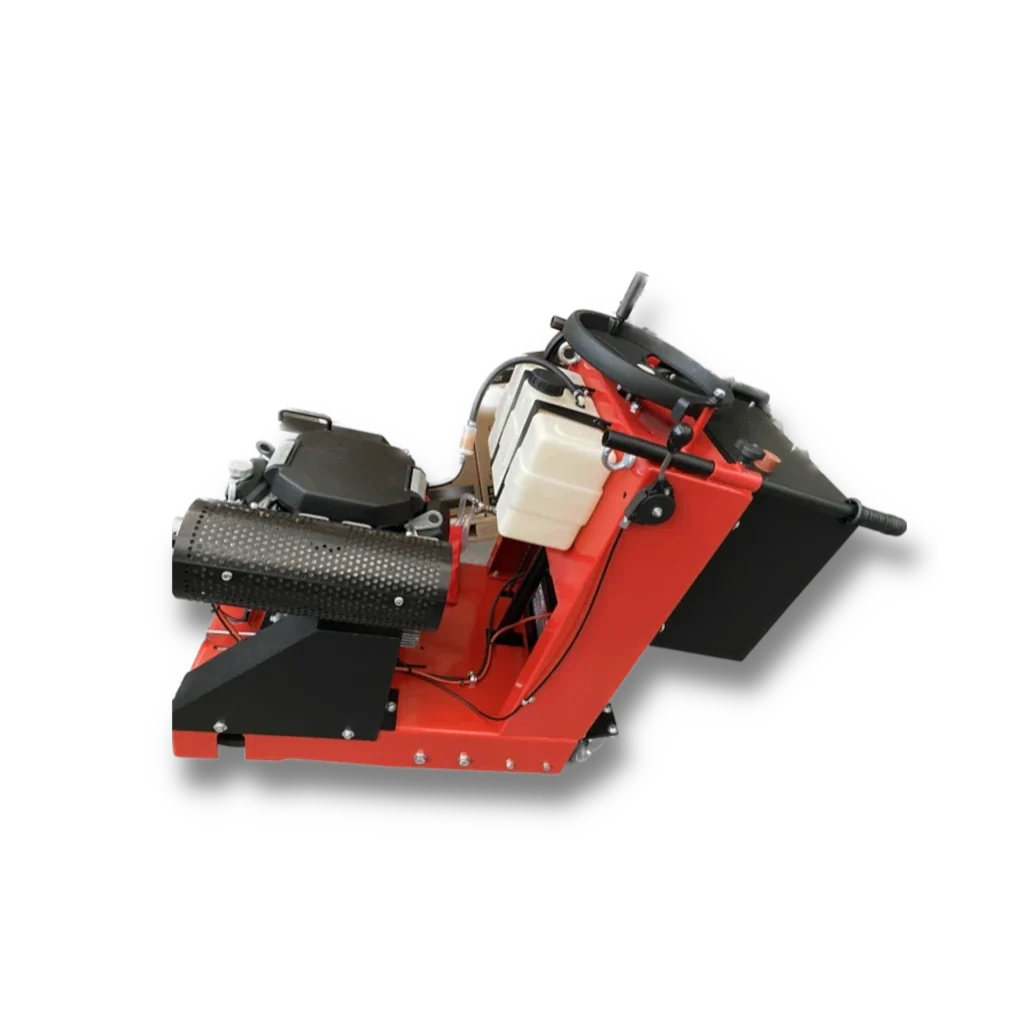
Model MT-70-3X
MICRO-TRENCH DELIVERY
Fits a grinding wheel up to 600 mm in diameter
Make a micro trench up to 23 cm, with a width of 16 or 20 mm (depending on the width of the grinding wheel sectors)
21 HP, petrol, 240 kg, handwheel movement
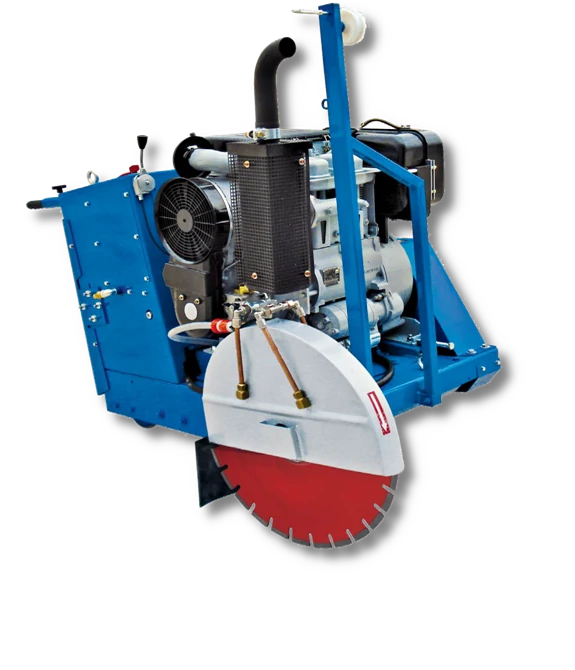
Model MT-80-3X
MICROTRENCEA CREATION
Fits a grinding wheel up to 800 mm in diameter
Make a micro trench up to 30 cm, with a width of 16 or 20 mm (depending on the width of the grinding wheel sectors)
35 HP, petrol, 670 kg, fully hydraulically assisted
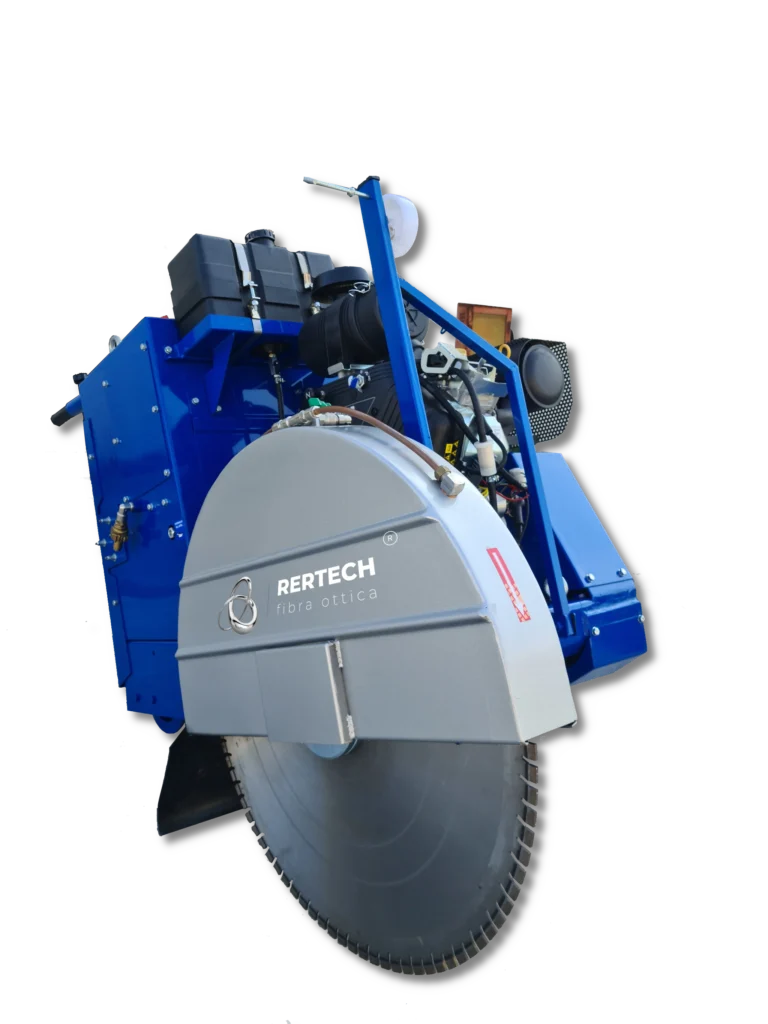
Model MT-90-3X
MICROTRENCEA CREATION
Fits a grinding wheel up to 920 mm in diameter
Make a micro trench up to 35 cm, with a width of 16 or 20 mm (depending on the width of the grinding wheel sectors)
40 HP, petrol, 700 kg, fully hydraulically assisted